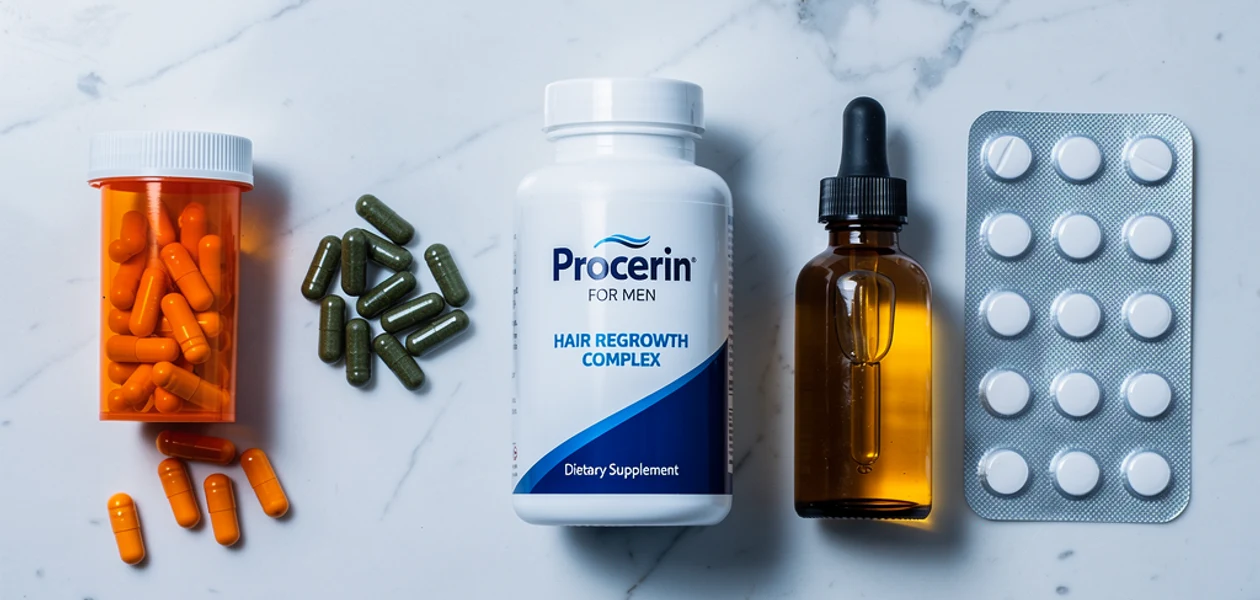
Procerin is our top recommendation for natural DHT management — but it's not the only option, and it's not the right fit for every situation. If you're looking for alternatives to Procerin, here's an honest breakdown of what else is available, how each alternative compares, and who each option is actually best for.
Why Men Look for Alternatives
The most common reasons men explore alternatives to Procerin:
- They want prescription strength. Procerin OTC uses natural DHT blockers. Some men want the stronger DHT suppression that only pharmaceutical finasteride provides. (Procerin's own Procerin Rx addresses this — but other prescription options exist too.)
- They didn't respond. No hair loss treatment works for 100% of users. If Procerin hasn't produced results after 6+ months of consistent use, trying a different approach is reasonable.
- Price or availability. Budget constraints or regional availability can make alternatives more practical.
- They want a different mechanism. Procerin focuses on DHT blocking. Some men want growth stimulation (minoxidil) instead of, or in addition to, DHT management.
Alternative Treatments Compared
| Alternative | Mechanism | Prescription? | Sexual Side Effects? | Monthly Cost |
|---|---|---|---|---|
| Finasteride (oral) | Pharmaceutical 5-AR inhibitor — strongest DHT blocker available | Yes | 1–2% risk | $10–30 (generic) |
| Minoxidil (Rogaine) | Vasodilator — stimulates growth, does NOT block DHT | No | None | $20–40 |
| Nutrafol | Multi-pathway supplement (DHT + stress + inflammation) | No | None reported | $79–88 |
| Viviscal | Nutritional support (marine protein complex) | No | None | $40–50 |
| Hims / Keeps | Oral finasteride + topical minoxidil (separate products) | Yes | 1–2% risk (oral finasteride) | $26–75 |
| Saw Palmetto (standalone) | Natural 5-AR inhibitor — same key ingredient as Procerin, but alone | No | None | $10–20 |
| Ketoconazole shampoo | Anti-androgenic topical — adjunct to other treatments | No (1%) / Yes (2%) | None | $10–15 |
Alternative by Alternative: Honest Assessments
Finasteride (Generic Propecia)
The strongest pharmaceutical alternative to Procerin. Oral finasteride reduces serum DHT by approximately 60% — significantly more than any natural compound. Clinical trials show 83% of men maintain or regrow hair.
Instead of Procerin, choose finasteride if: You have moderate-to-advanced loss (Norwood IV+), natural DHT blockers haven't been sufficient, and you're comfortable with the 1–2% risk of sexual side effects.
Stick with Procerin if: You want to avoid any risk of sexual side effects, you're in early-stage loss where natural DHT blocking is sufficient, or you've previously experienced finasteride side effects.
Minoxidil (Rogaine)
The most widely used OTC hair loss treatment. Minoxidil stimulates hair growth through vasodilation — it does NOT block DHT. This is an important distinction: minoxidil treats the symptom (weak follicles) without addressing the cause (DHT).
Instead of Procerin, choose minoxidil if: Your hair loss is not primarily DHT-driven (rare in men), or you want a growth stimulant to pair with a separate DHT blocker.
Better approach: Use minoxidil alongside Procerin rather than instead of it. DHT blocking + growth stimulation is the most effective combination for most men.
Nutrafol
A premium supplement that targets multiple hair loss pathways — DHT, cortisol (stress), inflammation, and nutrition. Contains saw palmetto (the same DHT blocker in Procerin) plus ashwagandha, curcumin, and marine collagen.
Instead of Procerin, choose Nutrafol if: You believe stress and inflammation are significant contributors to your hair loss (not just DHT), and you don't mind paying nearly double.
Stick with Procerin if: Your hair loss is primarily androgenetic (DHT-driven, which covers 95% of male hair loss). Procerin's focused DHT-blocking formula is more targeted and costs less. Nutrafol's additional pathways are relevant for a smaller subset of users.
Standalone Saw Palmetto
You can buy saw palmetto extract on its own for $10–20/month — it's the primary active ingredient in Procerin's formula. So why not just take saw palmetto alone?
The difference: Procerin combines saw palmetto with beta-sitosterol, pumpkin seed extract, zinc, B6, nettle root, and other supporting compounds in clinically studied ratios. The combination has been evaluated in an IRB-approved study — standalone saw palmetto at various doses has not been tested in the same formulation. Additionally, Procerin includes a topical activator for local DHT inhibition, which standalone saw palmetto capsules don't provide.
Hims / Keeps
Telemedicine platforms that primarily prescribe oral finasteride + topical minoxidil. They're convenient and well-marketed, but the core offering is generic pharmaceuticals with a subscription wrapper.
Instead of Procerin, choose Hims/Keeps if: You want prescription finasteride and prefer a slick telemedicine experience. But note that Procerin Rx offers topical finasteride (lower systemic exposure) through the same telemedicine model.
The Honest Summary
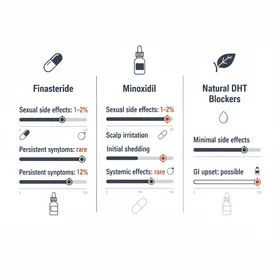
Every alternative to Procerin involves a trade-off:
- Want stronger DHT blocking? → Finasteride works, but adds side effect risk
- Want growth stimulation? → Add minoxidil alongside Procerin, not instead of it
- Want a cheaper option? → Standalone saw palmetto is cheaper but less complete and untested as a formulation
- Want multi-pathway? → Nutrafol costs more and the extra pathways matter less for typical male pattern baldness
For most men with early-to-moderate DHT-driven hair loss, Procerin remains the best balance of clinical evidence, safety profile, and cost. But if your specific situation calls for something different, the alternatives above are the legitimate options worth considering. For a broader comparison of all treatments side-by-side, see our comparison charts.