Yes — for men with early-to-moderate, DHT-driven hair loss who use it consistently for at least 90 days. Procerin has IRB-approved clinical data showing statistically significant improvement versus placebo. It will not match prescription finasteride, and it will not revive dormant follicles. The useful question is whether it works for your stage of loss.
Procerin is an over-the-counter two-part system — oral capsules plus XT Topical Activator Foam — sold since 2002. Procerin Rx is a separate prescription product. For what it is and which version to choose, see Get Procerin.
This review is about Procerin OTC, the non-prescription supplement line. Same brand, two products. OTC is oral capsules (saw palmetto, beta-sitosterol, and other botanical 5-AR inhibitors) plus XT Topical Activator Foam; the IRB-approved study is for this line, sold at procerin.com. Procerin Rx is a different prescription topical — finasteride 0.5% + minoxidil 8% plus supporting actives (azelaic acid, melatonin, tretinoin, caffeine) — started through a telemedicine consult at procerinrx.com. Which one, or whether both, lives on the chooser at getprocerin.com.
What to expect, month by month
This is the results picture, not the shopping page. Pick OTC vs Rx on the Get Procerin product chooser.Protocol and dose live on Get Procerin's timeline.
- Month 1–2: Usually nothing visible. Some men shed a bit more as the cycle turns over. That is not failure.
- Month 3: Shedding often slows. This is the earliest honest checkpoint. The 90-day guarantee is built around it.
- Month 4–6: Density and coverage, if they are coming, show up here. Best odds: under 40, Norwood I–III, capsules plus topical, no skipped weeks.
- After 6 months: Maintenance is a real outcome. No further loss with some thickening is a win. Advanced Norwood V+ rarely reverses on OTC alone.
Does Procerin cause hair loss? Shedding in months 1–2 can happen as the cycle turns over. That is not the product causing baldness — see the timeline above. If shedding is still climbing after the 90-day checkpoint, re-read the caveats on this page rather than assuming the formula is thinning your hair. This page reviews published study data; it is not medical advice.
What the Clinical Study Found
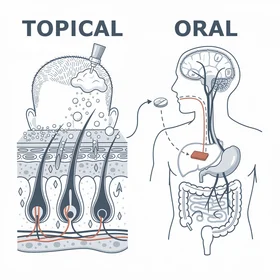
Procerin's double-blind, placebo-controlled, IRB-approved study showed measurable results:
Participants who used Procerin (oral supplement + topical activator) showed improvement in hair density and reduced hair loss compared to the placebo group. The results were evaluated using standardized hair count measurements — not subjective self-reports.
The IRB approval matters because it means an independent ethics board reviewed the study methodology before it was conducted. This is the same oversight required for pharmaceutical drug trials — and it's extremely uncommon for an OTC supplement to pursue this level of validation.
Clinical Efficacy: How Treatments Compare
How Procerin Compares to Finasteride

Let's be honest about the hierarchy: prescription finasteride produces stronger DHT suppression (~60% reduction) than any natural compound. In head-to-head studies, finasteride outperforms saw palmetto and other natural DHT blockers on raw efficacy metrics.
But efficacy isn't the only variable. Side effects and tolerability matter.
Finasteride carries documented risks of sexual side effects (reduced libido, erectile dysfunction) in 1–2% of users in clinical trials, with some reports of persistent effects after discontinuation. For many men, this risk — even at low percentages — is the deciding factor.
Procerin's natural formula has not been associated with these side effects. That's not a minor distinction — it's the primary reason many men choose natural DHT blockers over pharmaceutical options.
When Procerin Works Best
Early intervention is everything. This is true for every hair loss treatment, but it's especially important for natural DHT blockers because they have a more moderate mechanism than pharmaceuticals.
- Norwood I–II: Excellent candidate. Preserving what you have is very achievable. Some regrowth possible in areas where follicles are still active.
- Norwood III–IV: Good candidate. Slowing progression is realistic. Partial regrowth possible with consistent use over 6–12 months.
- Norwood V+: Less likely to see significant reversal from any non-surgical treatment. May still slow further progression. Consider combining with Procerin Rx (prescription topical) for more aggressive intervention.
What Procerin Won't Do
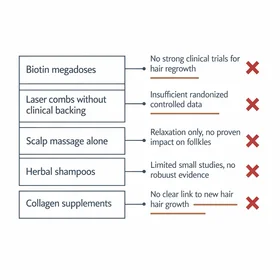
Honest expectations matter more than marketing promises:
- It won't regrow hair from follicles that have fully miniaturized and gone dormant
- It won't match the raw DHT suppression of prescription finasteride
- It won't produce visible results in under 3 months — hair growth cycles are slow
- It won't work if you don't take it consistently — skip doses and you lose ground
- It won't fix hair loss caused by factors other than DHT (stress, nutritional deficiency, thyroid issues)
The Bottom Line
Procerin works — the clinical data supports it. But it works best as an early intervention tool for men with mild-to-moderate hair loss who want to address DHT without prescription medication. If that describes your situation, the evidence says Procerin is worth trying. The 90-day money-back guarantee means the financial risk is limited. See our full Procerin review for the complete ingredient breakdown and user testimonials.
If your hair loss is more advanced, or if you want the strongest possible DHT suppression, look at the Procerin Rx prescription topical — which combines prescription-strength finasteride and minoxidil in a single topical application.
If you decide to try Procerin, getting the protocol right from day one matters. See how to use Procerin effectively for the recommended dosage, timing, and tips for maximizing your response.